SL. Lady Ciara
By Mark Farquhar
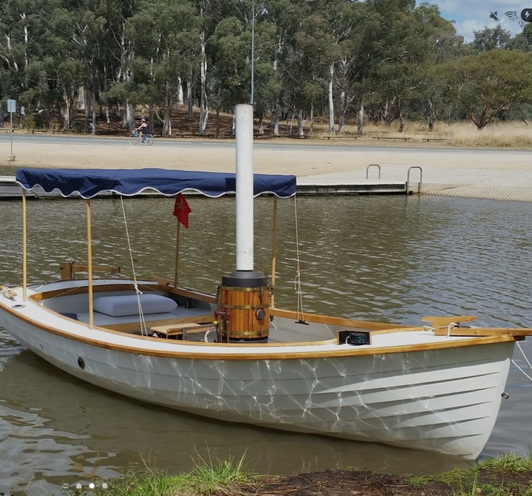
There is something special about moving a vehicle from one point to another via the power of steam, even more so when it’s on the water. Maybe it’s the romance of yesteryear or the sounds and smell of steam, hot oil and wood smoke while gently gliding through the water.
Enginering Works
My current steam boat was first launched in 2012 and since then has racked up a large number of kilometres under her keel. Early on much time was spent on salt water exploring the lakes around Forster Tuncurry north of Newcastle and brief trips down the NSW south coast which necessitated the boat be fitted with a condensing system. A condenser is basically a means of cooling the exhaust steam from the engine back to water (commonly referred to as condensate) where it is filtered and reused in the boiler. More common practice with small steam boats is to use a keel condenser, a length of pipe that runs along the underside of the boat next to the keel and returns inside the boat. A pump of some kind at the exhaust end of the condenser then siphons out the condensate and stores it in a container called a hotwell for reuse in the boiler.
As could be imagined there is a lot of engineering to set up such a system, get it working and maintain it. A lot of work and effort for a boat that now solely operates in fresh water. Adding into the mix reduced time due to family and work commitments has meant a boat that just doesn’t run like it did. A morning’s steaming when I did get the chance had become a chore and not enjoyable.
Following another poor performance by the boat during this years Boatfest, I made the decision to drastically change things. First was to address two questions: do I want to run in saltwater again?, and why condense when all I now do is go steaming on freshwater? The answer was a resounding no for many reasons which I won’t mention here, but suffice to say salt water requires a level of complexity I want to eliminate. A non condensing steam boat lifts its feedwater from the lake directly and exhausts up the chimney like a steam locomotive. It’s what gives the distinct chuff exhaust beat but more importantly helps draw the fire and improve the boiler’s capability to produce more steam. So while I lose the ability to run on saltwater, I get an improvement in steam production and a vastly simplified system that is easier to maintain.
So, having decided on a non-condensing system I planned out what could be removed from the boat and what new items would be needed. Gone was the keel condenser, air pump (used to siphon the condensate), hotwell (storage of the returned condensate) and associated plumbing. The forward water tank was retained as an independent water reserve for steaming on the trailer or when beaching on muddy banks etc. This left me with an engine, boiler and two large holes in the hull for the exit and return of the now defunct condenser. One of the holes was blanked off with a closed skin fitting while the other got a commercial ½ inch BSP stainless steel water scoop and an inboard seacock to isolate when needed.
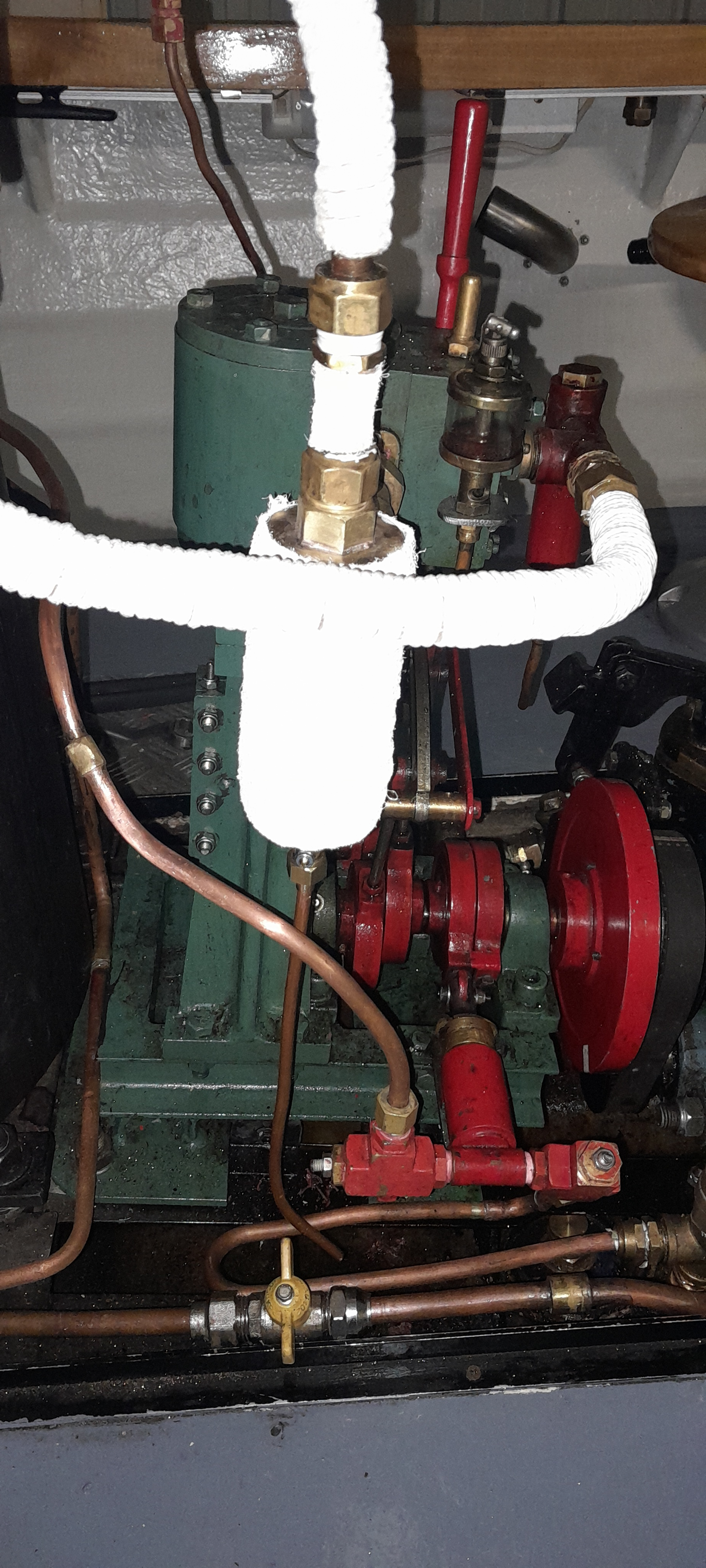
Now the hull was water tight again I could turn my attention to the feed water system. This would essentially be a two source system. Either from the new water scoop or the previously mentioned onboard 80 litre freshwater tank sitting under the forward seat. Apart from the manual feedwater hand pump, the steam engine has a mechanical driven pump that circulates water constantly while the engine is running. This means a bypass is needed when water is not being fed into the boiler. Having a skin fitting on the port side of the hull for the boiler blow down meant I could modify it to accept both the blowdown and bypass feedwater. A three way valve was also included in this line to allow bypassed feedwater to be returned to the water tank. The added advantage of this is the ability to replenish the water tank while steaming.
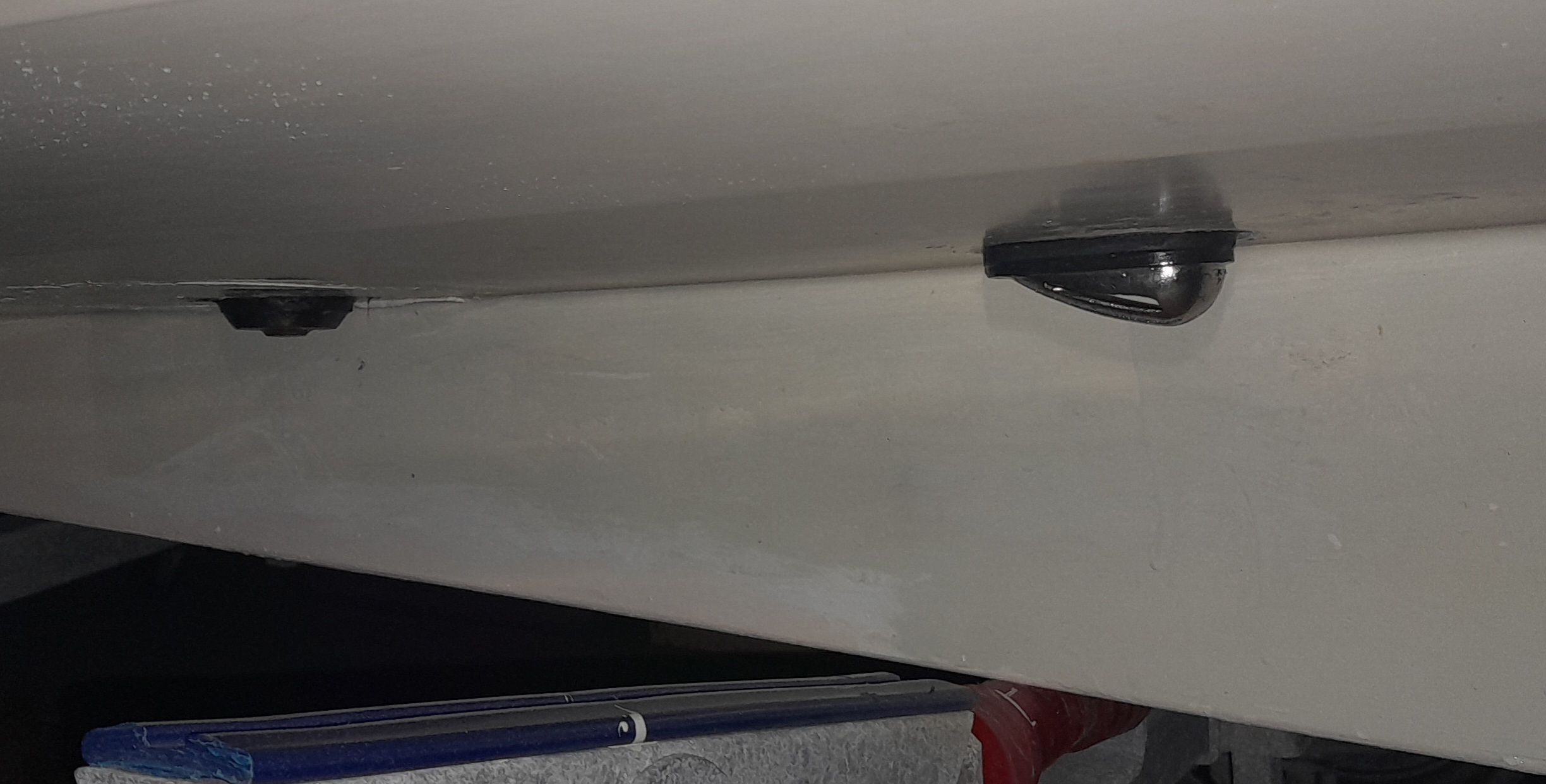
Now to the engine exhaust. This had always perplexed me whenever I had toyed in the past with the idea of a non-condensing steamboat. Should the boiler prime, or the skipper (me) forget to open the cylinder draincocks it was easy to be rewarded with a rain of black soot and water over a nice clean boat and anyone who had decided it was a nice day for steam boating!. After much research I decided to try an idea used by fellow steamboaters in the UK and USA, a device called a condensate trap. Basically a small container which the exhaust steam enters and swirls around before exiting and continuing up the chimney. The swirling steam sheds its water droplets to the bottom of the trap drying the exhaust steam out. A small drain valve at the bottom of the trap allows any collected condensate to be periodically drained out. After all this the final step was then to lag and paint all the new plumbing.
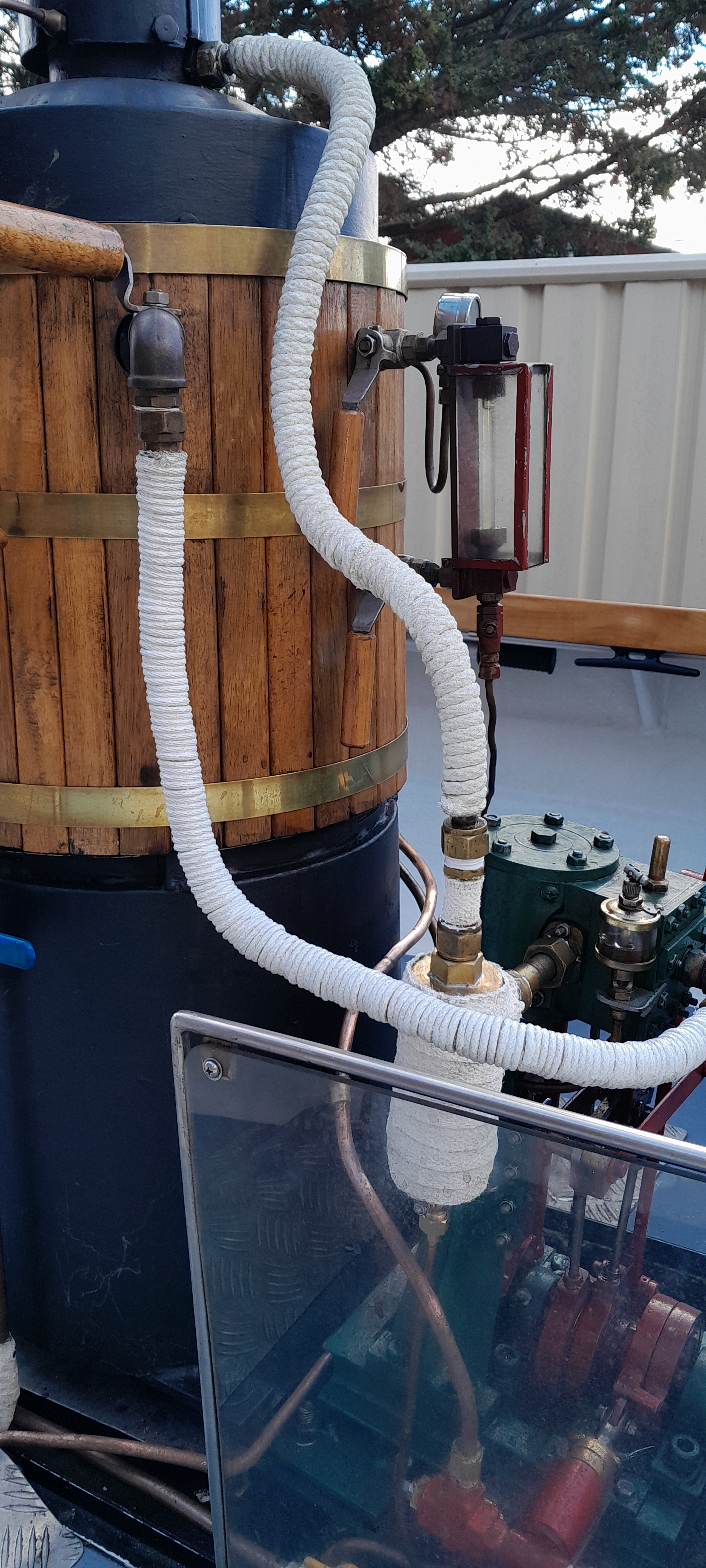
Since doing the refit, the boat has been steam tested on the trailer a few times and some fine tuning undertaken to resolve minor issues. I am very happy with the end results. A simplified boat is now ready for warmer weather and further steam trials on the water. So while the description of the re-fit may seem complex, the operation of the boat will be a lot simpler and perform a lot better than it previously did. Additionally, reliability will be a massive gain. I am very much looking forward to once again participating in sailing days and not expecting something to go wrong.
So what’s next, well sea (lake) trials for one when it warms up and enjoying more time on the water.
I hope this brief description provides some idea of the type of work and thought that goes into a steamboat. While it can sometimes be a lot of work and frustration, it can also be one of the most amazing ways to travel on the water. Then again I am quite biased about it.
– Mark Farquhar